


Luxury has traditionally been easy to recognize.
A distinctive logo.
A famous name.
A rare material.
A high price.
A product designed to be noticed.
But there is another kind of luxury that asks for much less attention.
It may be visible only to the person who owns it.
You notice the balance of a cup in your hand.
The depth of a lacquer surface.
The irregularity left by a firing process.
The softness of a carefully finished rim.
You understand why the object took time to make.
And you begin to appreciate details that may mean very little to someone who sees the object only from across the room.
This is one way to understand what is often called quiet luxury.
Not simply expensive things.
Not minimalism for its own sake.
And not the absence of a logo.
Rather, it is a way of thinking about value in which quality, craftsmanship, material, longevity, and personal meaning can matter more than obvious display.
That idea is becoming increasingly relevant as consumers question the relationship between price and genuine product value. McKinsey’s 2026 luxury research, for example, reports that emotional connection has become a major driver of desirability in both the United States and China, while craftsmanship and quality are increasingly treated as fundamental expectations rather than sufficient reasons for a high price on their own.
For handmade objects, this distinction is especially important.
Because when an object has no large logo to speak for it, the object itself has to do the speaking.
One of the easiest mistakes is to assume:
Expensive = luxurious.
But price and luxury are not identical.
A product can be expensive because of:
Price tells us how much something costs.
It does not automatically tell us why it is valuable.
Museums have documented historical objects in which craftsmanship itself—not simply the use of expensive materials—was central to their perceived value. The Metropolitan Museum’s discussion of the Wiener Werkstätte, for example, notes that some works deliberately placed greater emphasis on craftsmanship than precious materials.
This is an important distinction.
Luxury can exist in the material.
It can exist in the workmanship.
It can exist in the experience.
And sometimes it can exist in the knowledge required to appreciate what you are looking at.
Modern manufacturing is extraordinarily good at saving time.
Machines can repeat the same process thousands of times.
Standardization can make production faster.
Automation can make products more accessible.
These are remarkable achievements.
Handcraft follows another logic.
Some processes simply require time.
A material must be prepared.
A surface must be formed.
A piece may need to dry.
A glaze must respond to firing.
Lacquer may require repeated application and surface preparation.
The maker cannot always accelerate the process without changing the result.
This is part of what makes time an important component of craft value.
The time embedded in an object is not simply the number of hours someone spent working.
It also reflects the sequence of decisions that had to happen in the correct order.
That accumulated time can become invisible in the finished object.
You may hold a simple-looking cup without realizing how much work exists beneath its apparent simplicity.
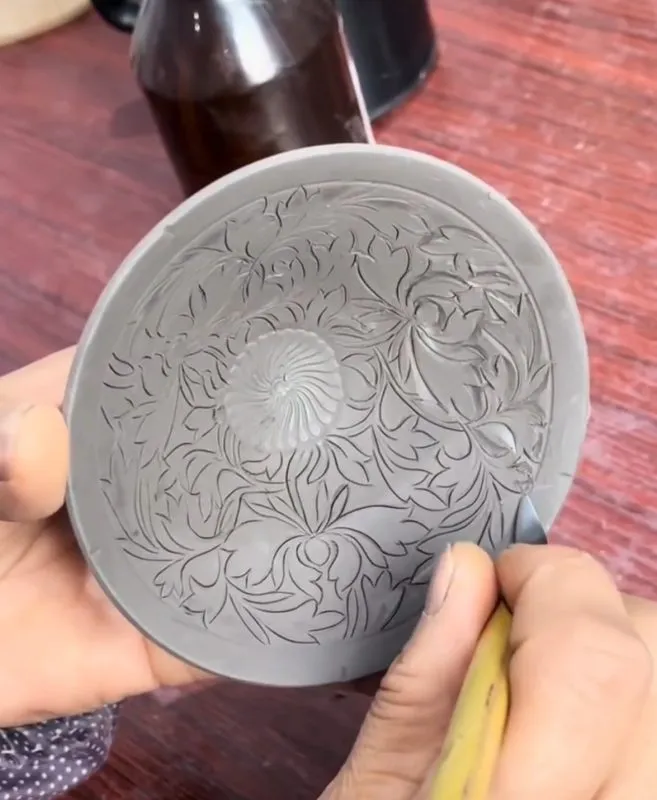
Luxury is often associated with precious materials.
Gold.
Diamond.
Fine leather.
Rare wood.
But traditional craftsmanship demonstrates another possibility.
The value can lie in what the maker knows how to do.
A complex surface treatment may require experience.
A difficult form may demand precise judgment.
A traditional technique may take years to understand.
A firing process may depend on decisions that cannot be reduced to a simple recipe.
The Metropolitan Museum has documented craft traditions in which the artistic and technical skill of the maker is central to the significance of the finished object.
This gives us a more useful definition of craft luxury:
Luxury can be the ability to experience a level of workmanship that cannot be reduced to mass production.
The object does not need to announce its complexity.
In fact, the complexity may be hidden.
There is another layer that becomes especially important with handmade objects:
knowledge.
A person who has learned to recognize different materials sees more than a person seeing the object for the first time.
A lacquer surface is no longer simply shiny.
You may begin to notice its depth, layering, finish, and response to light.
A hand-kneaded ceramic vessel is no longer simply irregular.
You may notice how the clay was shaped, how the surface responds to firing, and where the maker chose to preserve variation.
A celadon vessel is no longer simply green.
You may begin to look at the glaze, surface, proportion, and historical language of the form.
Knowledge changes perception.
And that changes value.
This is why quiet luxury can sometimes feel almost private.
Two people may look at the same cup.
One sees:
a small handmade cup.
The other sees:
a carefully balanced vessel, made from a particular material, finished through a labor-intensive process, with a surface that reflects a specific craft tradition.
The object has not changed.
The knowledge has.
This is one reason expertise can become part of luxury.
The more we understand, the more we are able to perceive.
And the more we perceive, the less we need obvious signals of value.
Materials are not interchangeable.
A machine can reproduce a shape.
It cannot make every material behave in exactly the same way.
Clay responds to pressure.
Fire transforms surfaces.
Natural lacquer builds through layers.
Porcelain requires particular control of body, glaze, and firing.
Wood carries grain and variation.
Each material places different demands on the maker.
This creates a relationship between:
material + process + skill
A handmade object becomes interesting when these three things work together.
That is why material knowledge matters so much in evaluating craft.
You are not only asking:
What does it look like?
You are asking:
What does this material allow the maker to do?
and:
What decisions were necessary to bring out those qualities?
That is a much deeper way of looking at an object.

Natural lacquer is an especially useful example.
A finely finished lacquer surface can look almost effortless.
Smooth.
Deep.
Quiet.
But the apparent simplicity can conceal a long process of preparation, application, drying, polishing, and finishing.
The Metropolitan Museum notes that traditional East Asian lacquerwork can require numerous layers and is consequently highly labor-intensive.
This creates a particular kind of luxury.
The surface itself becomes evidence of work.
There is no need for a large emblem to announce that the object took time.
Its material character already tells part of the story.
For a modern table, this can create an unusual contrast.
The object may appear visually restrained while containing a surprisingly complex craft tradition.
That is quiet luxury in its most literal form.
The luxury of hand-kneaded ceramics is different.
It often comes from individuality.
Clay does not always want to become a perfectly identical shape.
The maker works with its response.
The hands compress, stretch, smooth, and refine.
The kiln then introduces another layer of transformation.
When wood firing is involved, atmosphere, ash, temperature, and firing conditions can create additional variation.
The final vessel may therefore preserve evidence of both human intention and natural process.
This kind of object does not communicate luxury through perfection.
It communicates it through particularity.
There is only this piece.
Not because a marketing department declared it exclusive.
But because the material and process made exact repetition unrealistic.

Porcelain speaks a different language.
Its appeal may come from precision.
A clean surface.
Controlled proportion.
A carefully developed glaze.
A thin, balanced body.
The object does not need roughness or visible irregularity to communicate craftsmanship.
Its achievement may lie precisely in how much the maker has controlled.
This is an important reminder:
Handmade does not always mean visibly imperfect.
Some traditions celebrate variation.
Others demonstrate mastery through precision.
Both require knowledge.
Both can be beautiful.

Quiet luxury is often associated with restraint.
But restraint should not be confused with simplicity.
A form can be visually simple while technically demanding.
A monochrome glaze can require considerable control.
A plain lacquer surface can represent many stages of work.
A cup with no ornament may depend entirely on proportion.
When decoration is reduced, the quality of the underlying object becomes easier to notice.
This is why restraint can be demanding.
When there are fewer visual distractions, the material and craftsmanship have nowhere to hide.
Another reason handmade objects can fit the idea of quiet luxury is longevity.
A luxury object does not necessarily need to remain visually untouched forever.
What matters more is whether it can remain meaningful and useful over time.
A handmade cup that is used for years can become more valuable to its owner precisely because it has become familiar.
The object is still there.
The craftsmanship remains.
The relationship deepens.
This connects directly with what we explored in the previous article:
an object can become a companion.
Luxury therefore does not have to mean preserving an object behind glass.
Sometimes luxury means having something well made enough to use every day.
There is a subtle difference between owning beautiful things and living with beautiful things.
A decorative object can be admired.
A drinking vessel has to perform.
It needs to feel comfortable.
It needs to work with the hand.
It needs to suit the drink.
It needs to fit into the rhythm of daily life.
This is one reason everyday objects can be particularly meaningful forms of luxury.
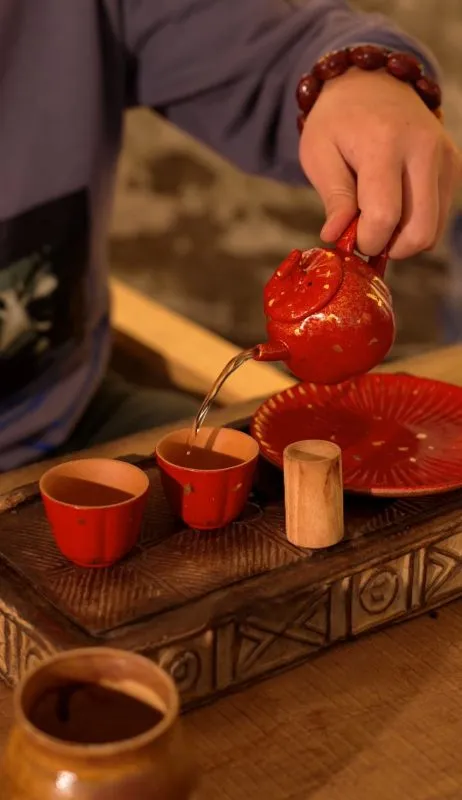
A cup can offer a few seconds of sensory pleasure every morning.
A tea tray can make preparation feel intentional.
A carefully made bowl can make an ordinary meal feel more considered.
The luxury is not simply possession.
It is repeated experience.
The phrase “if you know, you know” is often associated with contemporary quiet luxury.
There is an important insight behind it.
An object may not need universal recognition to have value.
In its 2026 luxury research, McKinsey reports that consumers are becoming more skeptical of scarcity for scarcity’s sake and that recognition within smaller, informed circles can matter more than being recognized by everyone.
For craft, this idea can be especially powerful.
A person who understands lacquer can notice a surface differently.
A person familiar with ceramics can recognize unusual firing results.
Someone who understands porcelain can appreciate refinement that another viewer may overlook.
The knowledge becomes part of the experience.
This is where the concept can easily go wrong.
If quiet luxury becomes:
“People who know are better than people who don’t,”
the meaning becomes shallow.
Craft knowledge should do the opposite.
It should make more people able to appreciate what they see.
You do not need to be a collector to understand why a carefully made object is interesting.
You do not need to know every Chinese ceramic tradition to appreciate celadon’s surface.
You do not need years of tea experience to notice that one cup feels more natural in your hand than another.
Knowledge is valuable because it makes experience richer.
Not because it gives us permission to look down on someone else.
There is another quality that cannot be manufactured at scale:
personal meaning.
A handmade cup may become associated with a particular stage of life.
A ceramic piece may remind you of a journey.
A tea set may become part of a family ritual.
A one-of-a-kind object may represent the moment when you began taking craft seriously.
No factory can produce that history for you.
The object can only provide the physical form.
Time and use complete the story.
This is why emotional value can eventually become part of perceived luxury.
Luxury becomes less about:
“Other people know this is expensive.”
and more about:
“I know why this matters to me.”
Traditional luxury often communicates status.
Quiet luxury can communicate something else:
appreciation.
Status asks:
Will other people recognize what I own?
Appreciation asks:
Do I understand what I own?
There is nothing inherently wrong with either.
But they create different relationships with objects.
A visible status symbol can be meaningful because of what it communicates socially.
A handmade object can be meaningful because of what it communicates personally.
The second relationship tends to reward knowledge and attention.
That is particularly compatible with handmade craft.
Understanding craftsmanship does not mean assuming every handmade object deserves a high price.
This is important.
A high price is not proof of excellent craft.
A low price is not proof of poor craft.
The responsible way to think about value is to examine what sits behind the price:
This is also why luxury consumers increasingly question the value proposition behind high prices. McKinsey’s 2025 luxury analysis noted growing pressure on brands to restore product excellence and maintain a credible relationship between price, craftsmanship, and quality.
The lesson for handmade objects is simple:
Price should have an explanation.
A large luxury house provides a recognizable identity before you even touch the product.
A small artisan object may provide much less information.
The owner has to discover it.
What kind of clay is this?
How was it fired?
Why does the rim feel this way?
Why is the glaze different here?
Why does the lacquer surface have this depth?
The process of learning becomes part of ownership.
This can create a very different form of satisfaction.
You are not simply buying an established definition of luxury.
You are developing your own understanding of it.
There is one final misunderstanding worth removing.
Quiet luxury does not require a house filled with expensive objects.
In fact, it can point in the opposite direction.
Choose carefully.
Use frequently.
Understand deeply.
Keep what continues to matter.
A single handmade cup used for years can be more meaningful than a cabinet filled with objects that were purchased impulsively.
The value comes from the relationship.
That is why the concept connects naturally with slow living.
The object does not compete for attention.
It becomes part of life.
Perhaps we can now define quiet luxury in a more useful way.
It is not:
expensive without a logo.
It is not:
minimalism with a higher price.
And it is not:
scarcity used as a marketing trick.
For handmade objects, a more meaningful definition might be:
Quiet luxury is the experience of living with objects whose value becomes clearer through craftsmanship, material understanding, thoughtful design, time, and personal use.
It is luxury that asks the owner to participate.
You notice.
You learn.
You touch.
You use.
You care.
And eventually, you understand why the object matters.
A handmade vessel may look simple.
But once you understand it, it becomes difficult to see it as simply a cup.
You begin to see:
the material,
the maker,
the process,
the decisions,
the time,
the intended use,
the small variations,
and the relationship it may have with your own daily life.
The object has not changed.
Your ability to see it has.
Perhaps that is the quietest luxury of all.
Not owning something that everyone recognizes.
But being able to recognize the value in something that does not need to announce itself.
Once we understand why craftsmanship, material, time, and personal meaning can create value, a practical question naturally follows:
How do we compare different handmade objects?
What makes one vessel better suited to daily use?
Why might someone choose lacquer instead of ceramic?
When is porcelain the more appropriate material?
Why would someone pay more for a one-of-a-kind artist piece?
And how should we think about craftsmanship when two objects have very different prices?
These are not questions with one universal answer.
They require a vocabulary.
They require comparison.
And most importantly, they require knowing what you are actually looking at.
That is where appreciation becomes discernment.
And discernment is the beginning of collecting.
Quiet luxury is a contemporary way of thinking about luxury that emphasizes qualities such as craftsmanship, quality, restraint, longevity, and personal meaning rather than relying primarily on conspicuous branding or status signals. It is not a standardized product category.
They can be, particularly when their value comes from craftsmanship, material quality, thoughtful design, individuality, and long-term use rather than conspicuous branding. However, being handmade does not automatically make an object a luxury product.
Handmade objects may require more individual labor, specialized skills, slower processes, smaller production volumes, and more material preparation. Price varies considerably depending on the maker, process, material, complexity, rarity, and market.
No. Price and craftsmanship are related in some cases but are not the same thing. Evaluating craftsmanship requires looking at material, technique, construction, finish, maker, consistency, and intended use rather than price alone.
A simple object can feel luxurious when its proportions, material, surface, comfort, craftsmanship, and use come together exceptionally well. Visual simplicity can sometimes make these qualities more noticeable.
No. Minimalism is primarily a design or lifestyle approach concerned with reduction and simplicity. Quiet luxury concerns how value is expressed and perceived. A richly crafted object can still fit a quiet-luxury aesthetic even if it is not minimalist.
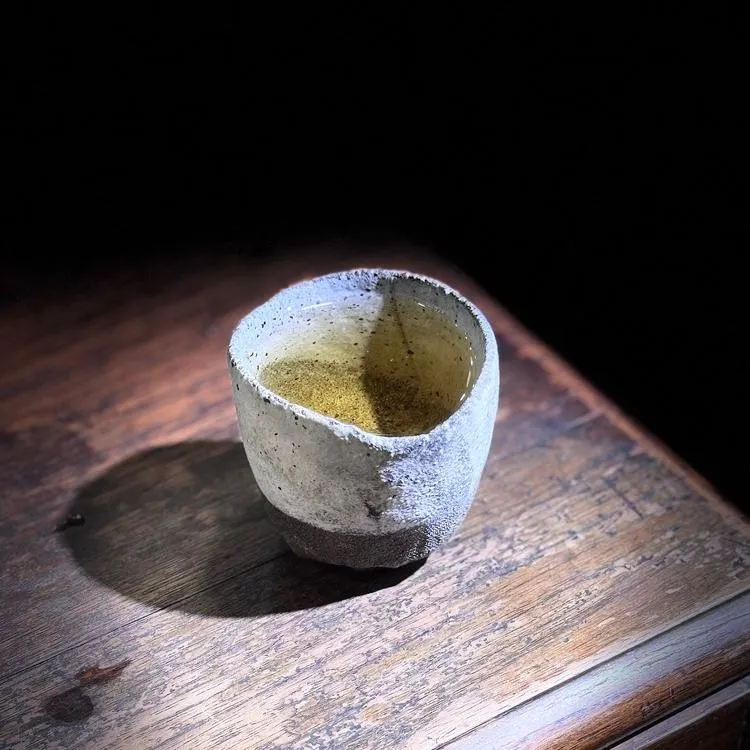
The most meaningful handmade objects often make no announcement.
They do not need to tell you how many hours they took.
They do not need to explain every decision.
They simply wait for the hand.
You pick them up.
You begin to notice.
And over time, you learn what makes them different.
Perhaps that is the most enduring form of luxury.
Not being surrounded by things that demand attention.
But having a few things that reward it.

 Adams Hao
 Adams Hao
 Adams Hao
 Adams Hao
 Adams Hao
 Adams Hao
 Adams Hao
 Adams Hao
Adams Hao
Adams Hao Adams Hao
 Adams Hao
 Adams Hao
No account yet?
Create an Account